
Imagine buying a four-bedroom detached home in Brampton for $2.2 million, only to see that same property sell a few years later for $1.25 million.
That’s a $950,000 difference on one house.
It’s an extreme example, and that property had its own circumstances behind the sale. But it also illustrates a much bigger story: the Brampton housing market correction has been substantial, and its impact reaches well beyond a handful of higher-end homes.
For anyone who bought during the pandemic-era frenzy, the important question isn’t simply how much Brampton prices have fallen. It’s what your specific property could be worth today—and what that means for your equity and your next move.
Watch Full Video
How Large Has the Brampton Housing Market Correction Been?
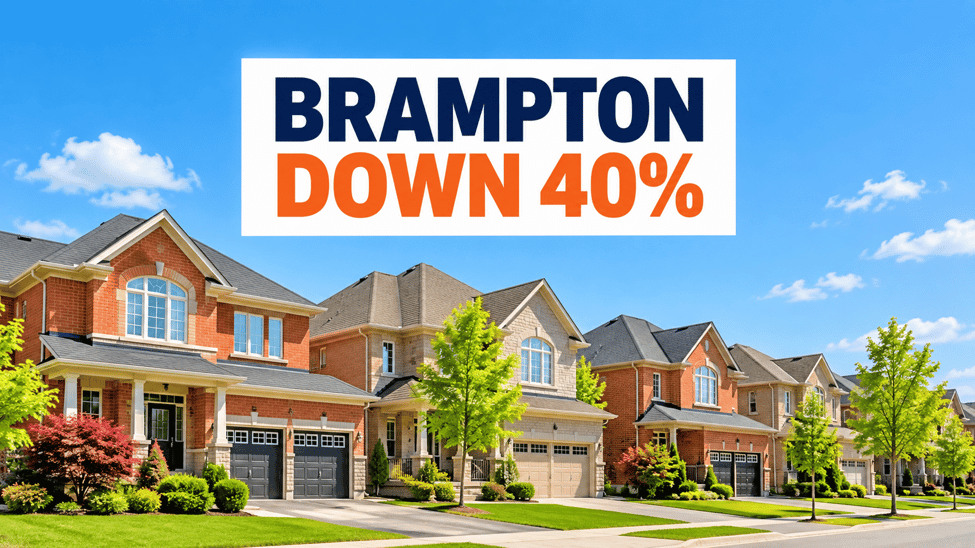
Detached homes in Brampton are averaging just over $1 million today, compared with a pandemic-era peak of approximately $1.65 million, according to the TRREB data discussed in the video.
That works out to roughly $630,000 below the peak, or close to a 40% decline in the average detached home price.
That doesn’t mean every Brampton homeowner has experienced the same decline. Property type, location and the individual home all matter. But it does show how dramatically the detached market has reset from its peak.
When all property types are blended together—including detached homes, semis, townhomes and condos—the overall average price discussed in the video is approximately $892,000.
Transaction volume has also changed significantly. Brampton went from more than 12,000 sales during the boom to fewer than 4,700 homes sold in the last year.
In other words, looking at one headline number doesn’t tell you everything happening underneath the surface.
Why Improving Market Indicators Don’t Tell the Whole Story
There are signs of improvement in some of the more recent numbers discussed in the video.
In July, sales were up 10% compared with the same month a year earlier, while new listings were down 23%. About 22% of homes sold above asking, sellers received roughly 98% of their list price, and listing terminations were down almost 37%.
Those numbers can sound encouraging on their own. The problem is that they need context.
Take the sale-to-list ratio. A property can sell for 98% of its asking price after the seller has already reduced that asking price once, twice or even more.
So selling close to the final asking price doesn’t necessarily tell you how far the seller had to adjust before a buyer was willing to make a deal.
That distinction matters in a market where buyers are extremely price sensitive and sellers are still adjusting to what today’s buyers are prepared to pay.
For Peak Buyers, the Equity Impact Can Be Significant
For homeowners who bought near the top of the market, this correction isn’t simply a percentage on a chart.
Years of savings may have gone into a down payment. When property values decline substantially, that equity can disappear quickly—particularly for buyers who entered the market with a smaller down payment.
If the homeowner hasn’t sold, that decline remains a paper loss. But if someone needs to sell at a substantially lower price, the loss becomes real.
Depending on the original down payment, how much of the mortgage has been paid down and what the home could actually sell for today, some owners could even find themselves owing more than the property is worth.
That’s why your purchase price alone doesn’t give you the information you need. You have to understand your current numbers.
Mortgage Qualification Is Part of the Brampton Story
Another part of Brampton’s boom discussed in the video is fraudulent mortgage qualification, including inflated income, fake employment documentation and borrowers being qualified using information that did not accurately reflect their finances.
That does not mean every Brampton homeowner experiencing financial pressure was involved in mortgage fraud.
But when inflated home prices, stretched buyers, higher borrowing costs and a substantial decline in property values come together, it helps explain why some households may now be under serious financial pressure.
It’s also impossible to know with certainty where prices go from here. One or two improving monthly indicators don’t erase the correction that has already taken place.
Your Mortgage Renewal Could Make Today’s Value More Important
If you bought near the peak, understanding your current equity position can become especially important as your mortgage renewal approaches.
If you’re simply renewing with the same lender, a decline in property value may not affect you in exactly the same way. But the situation can look different if you need to refinance, consolidate debt, access equity or move the mortgage elsewhere.
In those situations, what the property is worth today can suddenly matter a lot more.
That’s a conversation worth having before you’re backed into a corner.
What Does This Market Mean for Brampton Buyers?
A correction of this size can also create opportunities for buyers that simply weren’t available during the frenzy.
But a lower price doesn’t automatically make a property good value.
You still need to understand what that particular property type, neighbourhood and street are doing. A citywide average can provide context, but it can’t tell you whether the individual home you’re considering is priced appropriately.
Buyers are able to be far more selective, and sellers are finding creative ways to make their properties stand out. One listing mentioned in the video even featured a white Porsche and motorcycle digitally placed in the backyard parking area.
Apparently, we’re not just selling the house anymore. We’re selling the entire midlife crisis.
Joking aside, it’s an example of lifestyle marketing in a market where attracting a selective buyer can require a different approach.
Forget the Headline and Find Your Own Numbers
There’s understandable frustration among people who spent years saving, finally bought a home and are now looking at a property that may be worth considerably less than what they paid.
But frustration doesn’t tell you what to do next.
Your next move shouldn’t be based on a Reddit post, a headline or even Brampton’s average home price. It needs to be based on your own situation.
That means looking at:
- What you originally paid for the property
- How much you currently owe
- What the home could realistically sell for today
- Recent comparable sales for your specific street and property type
- Whether you’re approaching a mortgage renewal
- Whether refinancing, restructuring or selling could be part of your plans
For a clearer picture, look at actual sold comparables from the last three to six months for your property type and street. Compare those sales with what you paid rather than relying solely on a citywide average.
And if you’re within a couple of years of a mortgage renewal—particularly if you think you may need to refinance or restructure—it may be worth having those conversations sooner rather than waiting until the last minute.
What Is Your Brampton Home Actually Worth Today?
The $950,000 loss that opened this discussion is an extreme example, but the broader correction behind it is very real. The average detached sale price discussed in the video is roughly $630,000 below its pandemic-era peak.
What that means for an individual homeowner depends entirely on what they bought, when they bought it, how they financed it and what they plan to do next.
The market doesn’t base today’s value on what you originally paid. What matters now is what buyers are willing to pay for your property today.
So whether you’re considering buying, selling, refinancing or simply trying to understand where you stand, start with your own numbers rather than the headline.
Have questions about your home’s current value, equity or your next move in this market?