

Maple and Kleinburg both sit inside Vaughan's borders, and that's about where the similarity ends. One is a transit-oriented, practical community built around a GO station and a highway corridor. The other is a conservation-lined village that predates the GTA's suburban expansion by generations. Comparing them isn't really a "which neighbourhood is better" question — it's a "what kind of life are you actually buying" question.
Direct answer first: if your budget is transit-dependent, or you want the most house for your money with a realistic entry point, Maple wins. If lifestyle, space, and a genuine sense of place matter more than price per square foot — and your budget can stretch past $1.6M — Kleinburg wins. Here's the honest breakdown.
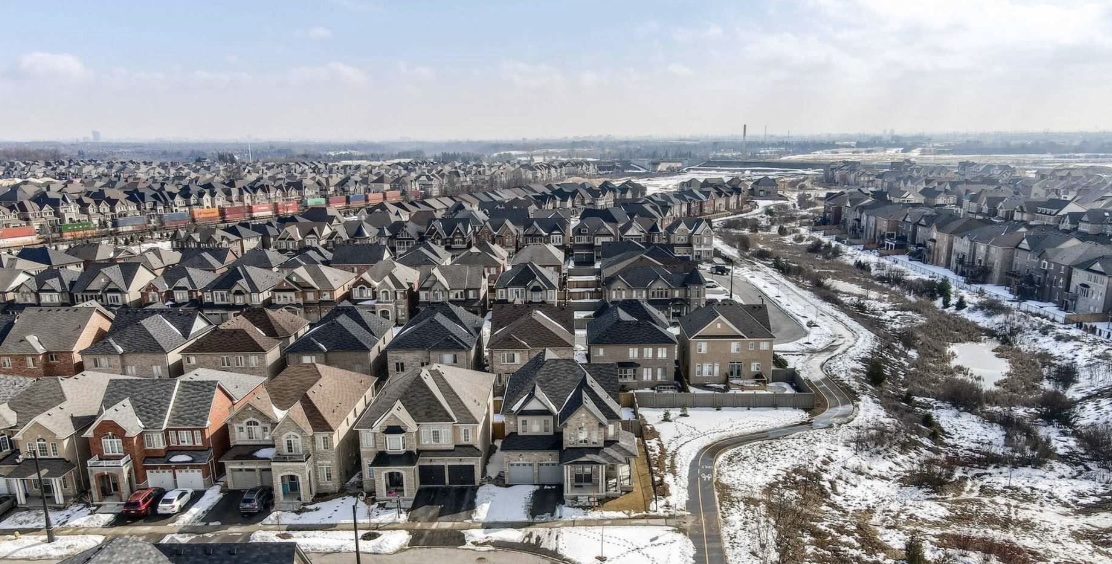 Price — Two Completely Different Tiers
Maple gives you real entry points across the board: detached homes from roughly $1.1M to $1.6M+, townhomes from $800,000 to $1,050,000, and condos starting around $600,000. It's a community where a budget-conscious buyer can still land genuine ownership.
Kleinburg starts where Maple's mid-range sits. The average sold price in Kleinburg runs around $1.7M, and $1.1M to $1.6M is Kleinburg's entry tier — typically a townhome or an older detached home in the village core that may need updating, not a custom estate product. The real Kleinburg experience — newer builds in the estate subdivisions — lives in the $1.6M to $2.5M range, and true custom estates on conservation-backing lots run $2.5M and up.
Put plainly: what gets you a detached home in Maple gets you Kleinburg's entry-level townhome. That gap is the first thing every buyer comparing these two needs to understand.
Transit and Commute — No Contest
Maple has a GO station on the Barrie line, with a direct run to Union Station in roughly 40–50 minutes. It's a genuine commuting option for anyone working downtown.
Kleinburg has no GO train and no subway connection of any kind. Your commute is entirely highway-dependent — Highway 27 connecting to the 400 and 427 — and on a normal day, downtown Toronto is 45–55 minutes from most Kleinburg addresses. In peak winter conditions, that number extends further. If you're commuting downtown five days a week without a hybrid arrangement, this is the single biggest practical strike against Kleinburg, and it's not one you can rationalize away after closing.
Community Character — Practical Diversity vs. Protected Village
Maple's identity grew up around infrastructure — the GO station, Vaughan Mills, the 400 corridor. The buyer base is genuinely diverse: young families, downtown commuters, investors, first-time buyers moving up from condos. It doesn't try to be anything other than a functional, well-connected place to live.
Kleinburg is a real village, not a marketing term for one. Nashville Road has independent restaurants and boutique shops that predate the GTA's suburban sprawl. Conservation land borders significant portions of the community, and the Humber Valley trail system runs directly through it. None of that was designed — it existed first, and the community has actively protected it. That's the source of Kleinburg's appeal, and it's genuinely difficult to replicate anywhere else in Vaughan.
Schools — Availability vs. Catchment Complexity
Maple's school infrastructure has grown alongside its newer development, though catchments vary meaningfully between the older and newer sections — worth verifying street by street.
Kleinburg's school options are more limited simply because of lower density — secondary students often travel to facilities in Woodbridge or Maple. Catchment boundaries matter here as much as anywhere, and two homes a short distance apart can feed into different schools. A meaningful share of Kleinburg families factor private schooling into their plans at this price point, and the Montessori School of Kleinburg operates within the community itself.
Lifestyle and Everyday Life
Maple's lifestyle draw is Canada's Wonderland at the community's edge, the Maple Community Centre for arena and pool access, and a GO station area that's been developing more walkable, mixed-use energy over time. For groceries, shopping, and everyday errands, you're largely covered within the community.
Kleinburg's lifestyle draw is Nashville Road itself — a main street that actually functions as one, plus the McMichael Canadian Art Collection and immediate access to the Humber Valley trail network. The trade-off: for everyday essentials like groceries and major retail, most Kleinburg residents drive 10–15 minutes to Woodbridge or Maple. It's not a hardship for people used to it, but it's a real difference from Maple's more self-contained day-to-day.
Who Wins for Which Buyer
A downtown commuter without a hybrid work arrangement: Maple, because of the GO station. This is close to a non-negotiable for daily downtown commuters.
A buyer prioritizing budget and a realistic entry point into ownership: Maple, clearly — the price gap between the two communities is significant at every tier.
A buyer with $1.6M+ who wants village character, conservation access, and a genuinely different lifestyle: Kleinburg, decisively.
A remote or hybrid worker whose commute flexibility removes the transit question: Kleinburg becomes a much more open decision, since the biggest practical strike against it stops applying daily.
A move-up buyer who's built equity elsewhere in Vaughan and is ready for something qualitatively different: Kleinburg is very often the destination at the top of that trajectory.
My Take After 20 Years Working Both Communities
These two don't actually compete for the same buyer, and that's the most honest thing we can tell you. Maple is the practical, well-connected choice for buyers who need their money and their commute to work hard. Kleinburg is the lifestyle choice for buyers who've decided that a village setting and conservation access are worth a real financial premium and a highway-only commute. The mistake we see most often is buyers comparing these two on price alone, as if they're competing options — they're not. Figure out which kind of life you're actually optimizing for, and the neighbourhood decision gets a lot easier.
Want to see what's actually available right now instead of just reading about it? Browse current Maple homes for sale or Kleinburg homes for sale.
FAQ
Which is more affordable, Maple or Kleinburg?
Maple, by a wide margin at every tier. Maple detached homes start around $1.1M against Kleinburg's $1.1M–$1.6M entry tier for townhomes or older detached homes, and Kleinburg's estate-subdivision product starts at $1.6M and climbs past $2.5M for custom estates.
Does Kleinburg have GO train access?
No. Kleinburg has no GO train and no subway connection — it's entirely highway-dependent via Highway 27, 400, and 427. Maple has a GO station on the Barrie line with a 40–50 minute run to Union Station.
Is Kleinburg worth the price premium over Maple?
For the right buyer, yes. You're paying for a genuinely different setting — village character, conservation land, the Humber Valley trail system — that doesn't exist anywhere else in Vaughan. For a buyer who just wants a home and a reasonable commute, the premium is harder to justify.
Which has better schools?
Maple has more school infrastructure simply due to higher density. Kleinburg's options are more limited, with secondary students often traveling to Woodbridge or Maple, and a meaningful share of families supplementing with private schooling.
Which is better for a downtown commuter?
Maple, decisively, because of the GO station. Kleinburg's highway-only commute runs 45–55 minutes on a normal day and is a serious daily consideration for anyone commuting downtown five days a week.
What's the biggest mistake buyers make comparing the two?
Treating them as competing options on price. They serve different buyers with different priorities entirely — the real question is which lifestyle and budget profile actually matches your life, not which neighbourhood is objectively "better."