

Moving from Toronto to Maple, Ontario is one of the few moves out of the city where you don't have to give up transit. Maple has its own GO station on the Barrie line, and that changes the whole conversation. But the train is only part of the story. What really decides whether the move works is everything else that changes in the first year, and that's what most buyers don't hear about until they're living it.
Here's the honest version: what your Toronto money buys in Maple, how the GO train actually fits into a week, and what families tell us surprised them.
What Your Toronto Money Buys in Maple
Unlike Woodbridge, Maple does give Toronto buyers a real price step down, not just more space for the same money.
- If you're selling a Toronto semi. The average semi in the City of Toronto sold for about $1.21 million in September 2026. In Maple, that's detached money. Older detached homes in Maple's established sections start around $1.1 million, and most range up to $1.6 million depending on condition and updates.
- If you're selling a Toronto condo. The average Toronto condo apartment sold for about $640,000 in September. Maple townhomes generally run $800,000 to $1,050,000, so most condo owners need to add to their equity to make the move. It's still a stretch for many families, but a much smaller one than buying a house in the city.
- Land transfer tax. Vaughan doesn't charge Toronto's municipal land transfer tax. On a $1.2 million purchase, that saves about $20,500 on closing day.
Our Maple community guide has current pricing for every property type, plus a live feed of what's for sale.
The GO Train: What It Really Looks Like in a Week
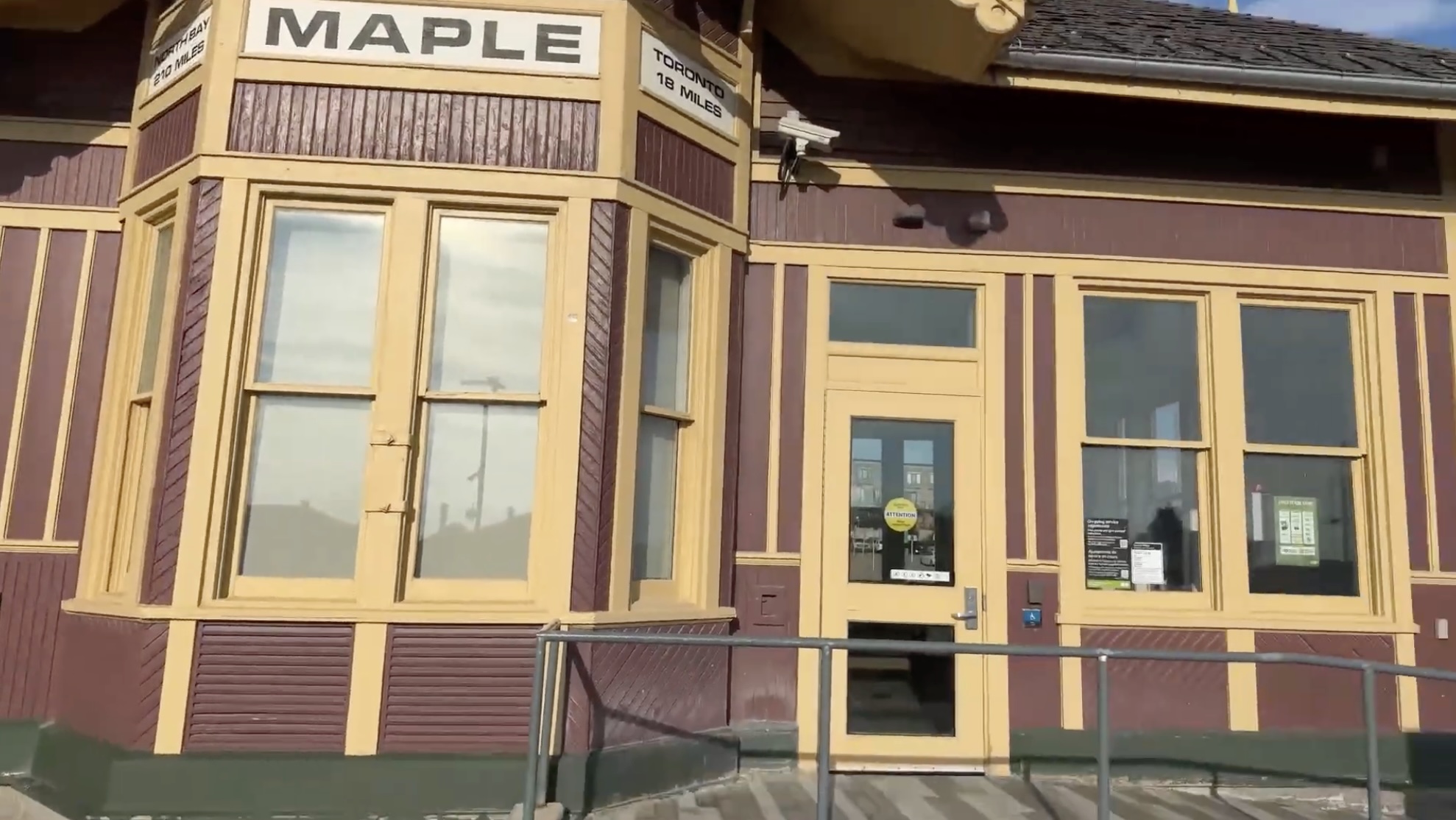
The Barrie line runs from Maple GO to Union Station in roughly 40 to 50 minutes. For a Toronto buyer used to the subway, that sounds like a perfect swap. In practice, a few things change:
- You'll probably drive to the train. The station isn't within walking distance of most Maple homes. Your door-to-door time includes the drive or the bus to the station and finding parking.
- The schedule runs your day. The subway comes every few minutes. GO trains run on a timetable, and they're less frequent outside rush hour. Miss your train and you'll wait.
- The TTC transfer is free. With a PRESTO card, the transfer between GO and the TTC is free under the province's One Fare program, so getting from Union to your office doesn't cost extra.
It works best for a hybrid week. Buyers who go downtown two or three days a week tend to love it. They read, they work, and nobody's dealing with the 400. Buyers who need to be downtown five days a week, on tight hours, feel the schedule more.
The honest summary: the GO train makes Maple work for a downtown job, but it doesn't make Maple feel like Toronto. For everything other than the commute, you'll drive.
Your First Year in Maple, Month by Month
We've helped a lot of Toronto families make this move. The stories follow a pattern, and it's worth knowing before you go.
The first month: space shock, in a good way. Families tend to underestimate how much the extra room changes daily life. A basement for the kids, a garage you can park in, a backyard you don't share. Most say the first few weeks feel like a vacation house.
The first three months: the car reality. Coffee, groceries, the pharmacy and the school run all happen by car. Families who arrive with one car usually buy a second within the first few months. Budget for it before you move, along with the insurance on a Vaughan address, which can be higher than what you paid in the city. Get a quote first.
The first winter: the real test. The first snowfall brings a driveway to clear and a commute that runs slower than it did on the September test drive. This is when people find out whether their schedule truly fits the GO timetable. Most adjust. A few decide they need to shift their working days.
The first summer: the neighbours you didn't know you had. Canada's Wonderland is a great amenity for families with kids, and a busy stretch of Rutherford Road on summer weekends. Vaughan Mills is ten minutes away, and Saturday afternoon parking there is its own sport. None of it is a dealbreaker. It's just worth knowing the traffic rhythm of the street you buy on.
Month twelve: the verdict. Most families who make this move stay. The schools and the space are usually what keeps them, and the commute becomes routine. The families who regret it almost always fall into one group: they bought for the GO train but needed the flexibility of the subway.
What You'll Miss About Toronto
It's better to say this out loud before you buy.
- Walking to things. Most of Maple is not walkable for daily errands.
- Late nights downtown. The last trains come earlier than you're used to, and a late dinner downtown can mean a drive home.
- Variety on your doorstep. Maple has good restaurants and everything you need, but it's not a neighbourhood strip with something new opening every month.
And what most families say they don't miss: the parking, the noise, and paying city prices for a house that's half the size.
Is Maple the Right Move, or Somewhere Else in Vaughan?
If transit to downtown is part of your life, Maple is the clear choice among the Vaughan communities we work in, because it's the only one with its own GO station. If you'll be driving anyway and want deep community roots, compare it with Woodbridge. We laid out that comparison in Moving from Toronto to Woodbridge. And before you start booking showings, read 7 Mistakes We See Every Year in Maple, which covers the most common GO train assumptions.
Frequently Asked Questions
Is Maple cheaper than Toronto?
For detached homes, usually yes. In September 2026, the average Toronto semi sold for about $1.21 million, which is enough to buy an older detached home in Maple, where detached prices generally run $1.1 million to $1.6 million. You also avoid Toronto's municipal land transfer tax.
How long does the GO train take from Maple to Union Station?
Roughly 40 to 50 minutes on the Barrie line. Add the time to get to the station, since most Maple homes aren't within walking distance of it.
Do I need a car if I live in Maple?
Yes. Even if you take the GO train to work, almost everything else in Maple is done by car, and most families end up with two.
Is the GO to TTC transfer free?
Yes. Under Ontario's One Fare program, transfers between GO and the TTC are free when you pay with PRESTO or a credit or debit card.
Are the schools in Maple good?
Maple has a strong school reputation across both the public and Catholic boards, and it's one of the main reasons families move here. Catchments vary by street, so confirm the specific school for any address before you make an offer.
Who regrets moving from Toronto to Maple?
Mostly buyers who need to be downtown every day on a tight schedule, or who rely on the flexibility of the subway. For hybrid workers and families focused on space and schools, the move usually works very well.
Thinking About Making the Move?
The best way to decide is to run your own numbers: what your Toronto home sells for, what that buys in Maple, and how the GO schedule fits your week. Call us at 416-987-8000 or book a time that suits you, and we'll walk through it with you. No pressure, and no sales pitch.