

Kleinburg is one of the few places in the GTA where buyers are usually happier after they move in than they expected to be. It's also a community where the surprises are specific, and they rarely show up in a listing or a Sunday showing. The village, the valley and the trails are exactly what they look like. The cost and logistics of living around them take a little more homework.
Here are five things we make sure every buyer knows before buying in Kleinburg.
1. Winter Changes Both the Commute and the Driveway
Kleinburg's commute runs entirely on highways. Highway 27 connects to the 400 and the 427, and the 427 extension north to Major Mackenzie made the drive south noticeably easier. On a normal day, downtown Toronto is roughly 45 to 55 minutes away. Winter is a different story.
When the snow comes, roads around the village and its valley slopes behave very differently from a flat suburban grid. A commute that's 50 minutes in October can stretch well past an hour on a bad January morning. Then there's the driveway. Estate lots often come with long driveways and large paved areas that no one is shovelling by hand. Most owners budget for a seasonal snow-clearing contract, and on a big property that's a real annual cost, not an afterthought.
None of this makes Kleinburg a bad choice. It makes the commute something to test in January, not just in June. Our Kleinburg community guide lays out the commute honestly, including who it works for and who it doesn't.
2. Your Property Tax Is Based on a 2016 Value, Until You Change the House
Buyers coming from a smaller home are often surprised by the tax bill on a Kleinburg estate property. What surprises them more is how that bill is calculated.
Ontario hasn't done a province-wide reassessment since 2016. For the 2026 tax year, property taxes are still based on what each home would have sold for on January 1, 2016. That means your tax bill reflects the 2016 value of your house, not what you paid for it. Two neighbouring homes that sold for similar prices this year can carry very different tax bills, depending on how each was assessed back then.
Here's the part nobody tells you: that 2016 value can change if you change the property. MPAC reassesses homes after additions, new structures or major renovations, and the updated assessment can arrive months after the work is finished. If you're buying with plans to add a pool house, finish an addition or rebuild entirely, budget for a higher tax bill afterward. Ask for the current tax bill before you write an offer, and don't assume it will stay put once your renovations are done.
3. The School Run Is a Second Commute
Kleinburg has fewer local schools than denser parts of Vaughan, and most families know that going in. What catches them off guard is the daily logistics.
Secondary students typically travel to schools in Woodbridge or Maple, and families who choose private education often drive further. A family with two kids at two schools can easily add a second commute to the day, morning and afternoon, on top of the work drive. Because the community is spread out, two homes a short distance apart can also feed into different schools. Confirm the exact catchment for the specific address, then map the actual school-run route at 8 a.m. before you fall in love with the house.
4. Heritage Rules Apply to the House You Buy, Not Just the One You Build
Much of the village core falls within the Kleinburg-Nashville Heritage Conservation District, which is designated under the Ontario Heritage Act. Most buyers assume that only matters if you're building something new. It doesn't.
Inside the district, new construction, additions and exterior alterations require a heritage permit and review against the district's guidelines. That can include things that feel minor, like changing window sizes, replacing cladding or adding a rear addition. The guidelines can specify materials and design approaches, and work done without a permit can lead to fines and an order to undo it. If you're buying a village-core home with plans to change its exterior, find out whether it's a contributing heritage property and what the guidelines allow before you firm up.
If your plan is a full custom build, the heritage review is only one part of a longer approvals process. We cover the rest, including why custom builds here so often run over budget, in Building Custom in Kleinburg.
5. People Don't Leave, So the Right House Is Rare
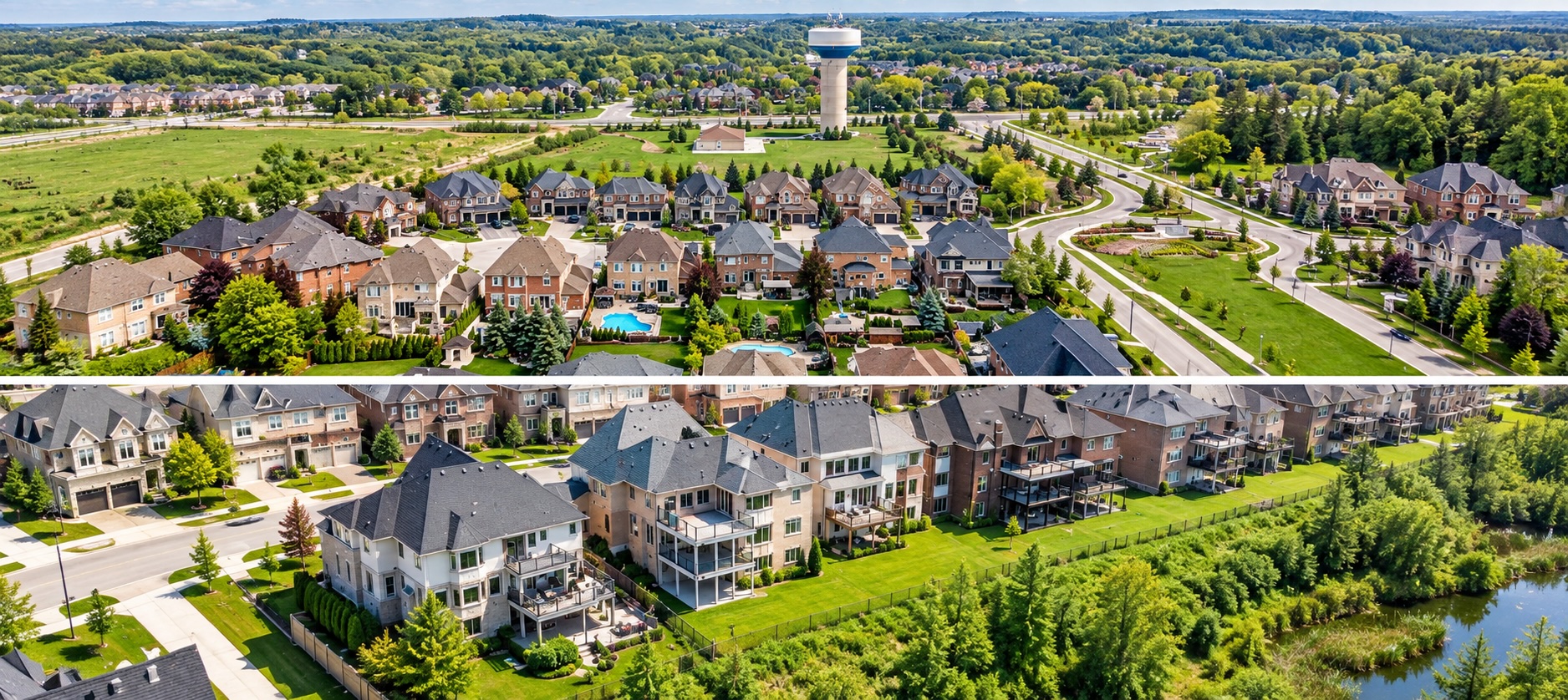
This is the one that doesn't sound like a warning, but it shapes everything else. Kleinburg's satisfaction is real. Owners tend to stay for a long time, and that keeps inventory thin. When we compared active listings across our four communities in September, Kleinburg had 91, the fewest of the four. Vellore Village had 158. We explained what drives those differences here.
Fewer listings means less choice at any given moment, especially on a particular street or lot type. Buyers who are set on, say, a conservation-backing lot in a specific pocket may wait months for the right one. The practical answer is to be ready before it appears: financing approved, your must-haves separated from your nice-to-haves, and a clear sense of what a fair price looks like. When the right Kleinburg house comes up, the buyers who've done that homework are the ones who get it.
It's also why the lifestyle matters more than any single feature. We wrote about what people actually find after they move in, and why most of them stay, in The Kleinburg Village Lifestyle.
Frequently Asked Questions
How long is the commute from Kleinburg to downtown Toronto?
On a normal day, roughly 45 to 55 minutes by Highway 400 or 427. In winter conditions or heavy traffic, it can run well past an hour. There's no GO train in Kleinburg, so the commute is highway-only.
Why are property taxes in Kleinburg so high?
Estate homes carry high assessed values, and taxes are based on those assessments. For 2026, Ontario assessments are still based on January 1, 2016 values. Additions, new structures and major renovations can trigger a reassessment and a higher bill.
Where do Kleinburg kids go to high school?
Secondary students typically travel to schools in Woodbridge or Maple, and many families choose private schools. Catchments vary by address, so confirm the specific school before you buy.
Can I renovate a house in Kleinburg village?
Yes, but if the home is inside the Kleinburg-Nashville Heritage Conservation District, exterior alterations, additions and new construction need a heritage permit. Check what the district guidelines allow before you firm up on a purchase.
Why are there so few homes for sale in Kleinburg?
Owners tend to stay for a long time, and the community is smaller and lower-density than the rest of Vaughan. That keeps inventory thin, so buyers who are ready to act when the right home appears have the advantage.
Is Kleinburg a good place to live?
For buyers who value the village, the trails and a quieter pace, and who have tested the commute honestly, it's one of the most satisfying places to live in the GTA. Most of the drawbacks are practical, and they're manageable if you know them going in.
Thinking About Kleinburg?
Most Kleinburg surprises are about logistics, not the lifestyle. If you'd like to talk through a specific street, the tax picture on a particular house, or how long the right property might take to appear, book a call with us. We'll give you the straight version.