
Why Ontario Investors Are Looking Beyond the 416
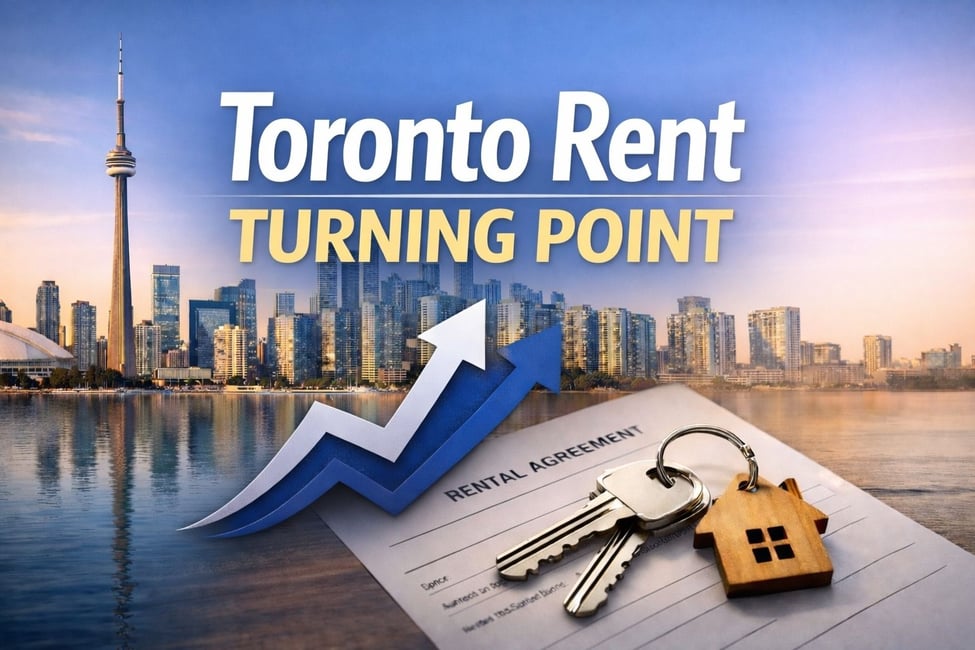
Toronto’s rental market is sending a message, and it’s not exactly subtle anymore. Condo landlords across the city are trimming asking rents, stretching listing timelines, and quietly absorbing negative cash flow while hoping the next tenant appears like a miracle at an open house.
Meanwhile, in cities like Hamilton and Kitchener, renter interest is showing much stronger momentum. Same province. Same broad economy. Same rate environment. Completely different landlord experience.
That matters because Ontario real estate investing is no longer just about owning something in Toronto and waiting. Today, more investors are asking a better question: where does the math actually work now?
Watch Full Video
Toronto rents are cooling, and that changes the investor conversation
Recent Rentals.ca reporting showed Toronto apartment rents at $2,498 in December 2025, down 5.1% year over year and at their lowest level since early 2022. Ontario apartment rents were also down 9.7% over two years. That is not the kind of backdrop condo investors were dreaming about a few years ago.
To be clear, Toronto is still expensive. Nobody is walking around calling $2,498 a bargain with a straight face. But the direction matters. When rents cool in a market where many owners already face tight margins, the pressure lands directly on cash flow.
And that is where the story gets interesting. Because this is not just a “Toronto is soft” headline. It is really a story about renter migration, housing preference, and portfolio repositioning.
The problem is not just price. It’s value.
A lot of renters are no longer asking, “Can I technically squeeze into this condo?” They’re asking, “What do I actually get for this rent?”
That shift matters more than many investors realize. In downtown Toronto, $2,400 to $2,600 may get a renter a compact condo with little storage, no yard, and maybe a view if the building next door behaves. In Hamilton or Kitchener, that same renter may find more square footage, parking, and a layout that feels like a home instead of a very stylish shoebox.
Once renters start comparing lifestyle instead of postal codes, the market starts to fragment. And that fragmentation is exactly what Ontario investors are dealing with right now.
Why young renters are driving the shift
Younger adults are under real financial pressure. Statistics Canada reported that the unemployment rate for youth aged 15 to 24 was 12.8% in January 2026. Separate Statistics Canada analysis found that 57% of Canadians aged 20 to 24 lived with their parents in 2021.
That is a giant clue for landlords and investors. A tenant base under pressure does not magically stretch forever. At some point, people downsize, move farther out, get roommates, delay household formation, or stay home longer. None of those outcomes help a landlord banking on premium condo rents.
Add to that the broader affordability strain. Food Banks Canada reported nearly 2.2 million food bank visits in March 2025, the highest on record, and said one-third of food bank clients are children, representing nearly 712,000 visits.
That does not mean every renter is in crisis. It does mean affordability is now a defining force in the market. Investors who ignore that are basically using yesterday’s map for today’s road trip.
Why Hamilton and Kitchener are getting more attention
Secondary markets are benefiting from three big forces: affordability, housing type, and connectivity.
First, affordability still matters — a lot. Renters want room to breathe financially, not just physically. If moving outside Toronto frees up hundreds of dollars per month, that becomes a lifestyle upgrade, not a sacrifice.
Second, many renters prefer low-rise “missing middle” housing: duplexes, triplexes, freehold townhomes, and small multifamily properties. These homes often offer better livability than a small downtown condo.
Third, commuting patterns have changed. Hybrid work means some tenants only need to be in the office a few days a week. That makes cities with GO access and regional connectivity far more attractive than they were in the old five-days-a-week office model.
This is where investor strategy needs to mature
For a long time, plenty of buyers leaned on one basic assumption: even if condo cash flow is weak, appreciation will save the day.
Maybe. Maybe not. But that is a fragile plan.
A more resilient strategy is to start with income, tenant quality, and property utility. In plain English: buy the kind of housing people actually want, in locations they can actually afford, at numbers that do not require constant optimism to survive.
That does not mean Toronto is “over.” It means Toronto condos are no longer the automatic winner in every investor scenario. Today, the spread between prestige and performance can be wider than many owners expected.
The next phase could favor the right secondary markets
Another factor to watch is supply. Rentals.ca noted that renter behaviour in 2026 will continue to be shaped by affordability challenges, slower in-migration, and shifting mobility patterns. It also pointed to record-high apartment completions as one reason rents faced pressure in 2025.
But if development slows in certain segments while population needs continue, pressure can spill outward rather than vanish. That is one reason many investors are paying closer attention to connected Ontario markets where the entry price and rent-to-income math look healthier.
What should landlords and investors do now?
Start with honesty. Not “I really love the skyline” honesty. Real honesty.
Look at your current property and ask: Is this asset helping my portfolio, or am I helping this asset survive?
If you are carrying a condo with weak rent performance, limited upside on cash flow, and rising fatigue, it may be time to review whether that equity could work harder elsewhere.
For many investors, the better opportunities right now are not necessarily the flashiest ones. They may be the duplex near transit. The freehold townhome in a growing corridor. The small multifamily property with steady renter demand.
Glamorous? Maybe not. Effective? Very often, yes.
Bottom line: follow migration, not ego
The Ontario rental market is no longer moving as one big uniform block. Toronto condos, Hamilton rentals, and Kitchener low-rise housing are behaving differently because renters are making different decisions.
And renters are the signal.
Investors who follow affordability, functionality, and demand migration are putting themselves in a much stronger position than those waiting for an old story to come back.
The smartest move in this market is not chasing bragging rights. It is building a portfolio that makes sense in real life, on real numbers, with real tenants.
Frequently Asked Questions
Why are Toronto condo rents falling?
Affordability pressure, softer renter demand, and more competition have all contributed to lower asking rents.
Why are Hamilton and Kitchener attracting renters?
They offer better affordability, more livable housing options, and strong connectivity for hybrid workers.
What type of housing is performing better right now?
Many investors are focusing on low-rise and missing middle housing such as duplexes, triplexes, townhomes, and small multifamily properties.
Should first-time investors avoid negative cash flow?
Many are doing exactly that and prioritizing stability, financing flexibility, and cash flow from day one.
Ready to stop guessing and start investing strategically?
The opportunities are still out there — but they are not evenly distributed. The right street, property type, and tenant profile make all the difference.
If you want clarity on where the numbers make sense today, book a strategy call with our team.